...

What is Supported Independent Living for Mental Health?

Support worker assisting individual with daily tasks under Supported Independent Living for mental health recovery

Table of Contents

Living with a mental health condition can make everyday tasks harder. But it doesn’t mean you can’t live independently. Supported Independent Living (SIL) is funded by the NDIS. It gives people with mental illness the support they need to live safely in their own home with more freedom and confidence.

What Is Supported Independent Living for Mental Health?

Supported Independent Living, or SIL, is supported to help people with mental illness live in a home by themselves or with others. The NDIS pays it, and it is targeted at people who require daily assistance to safely and comfortably reside at home.

Workers who assist patients include support workers who take care of the daily activities such as cooking, cleaning, taking medication, or going out to the community. The work of SIL is not limited to chores. It is also about making someone feel capable and supported in their daily life.
Do you or any of your family/friends live with a mental health condition? SIL might be the second step to a higher level of independence and improving the quality of life.

Who Can Get Mental Health SIL Support?

SIL is for people with a mental health diagnosis and requiring assistance on a daily basis to live well. It assists individuals with psychosocial impairment, such as individuals who live with depression, anxiety, PTSD, schizophrenia or bipolar disorder. SIL gives them the support needed to manage everyday life better.
To get SIL, you need to be part of the NDIS. Your NDIS plan must also include a goal for independent living or daily support. You’ll also need to show that you need help each day to manage your tasks at home and in the community.
Your doctor or psychologist can write reports that explain your needs. If the NDIS approves it, they will add SIL funding to your plan. It falls under the “Assistance with Daily Life” part of your NDIS supports.

What Does Mental Health SIL Support Look Like?

SIL looks different for every person. Some people might need help all day and night. Other cases may just require the aid during mornings or evenings. The availability of the help depends on what you need because of which you can live a good life and feel happy at home.
Examples of problems that such support workers can help with include cooking, cleaning, taking medication, attending visits, or budgeting. They can also help you get ready to face the day, participate in group activity or have a routine. They are trained to support people with mental health needs in a calm and respectful way.

What Is Mental Health Supported Accommodation?

Mental illness supported accommodation is the place, where mentally sick individuals live and receive assistance daily. These are serene, friendly houses and they feel like a normal home. They provide safety and other kinds of support that people require and allow them space and autonomy.

Some homes are shared with two to seven people. Others are smaller and more private. You can even live with individuals who receive NDIS support as well. This is in order to provide you with privacy when you require it and converse when you wish to do so. It is about getting the balance right.

Some people may also need more housing support. If your needs are higher, the NDIS may fund SDA (Specialist Disability Accommodation) or other housing options designed for people with more complex challenges.

How SIL Helps People with Psychosocial Disability

If your mental health condition affects how, you live every day, that’s called a psychosocial disability. SIL is there to support you with that. It gives you help to manage those challenges and feel more confident at home and in the community.
SIL helps you create a daily routine, be more in control and develop improved interpersonal relations. It provides you with the opportunity to learn, develop, and be part of the group. You will not be as alone, and you will also have the assistance you apparently require in dealing with stress and feelings.
Recovery doesn’t mean everything is perfect. It means learning to live well and feel good in your own way. SIL helps by giving structure, support, and the tools to build a life that works for you.

NDIS SIL Mental Health Services in Melbourne

If you live in Melbourne, there are many NDIS mental health services available, including SIL. You’ll find SIL providers in different suburbs, and be ideally near to family, shops, transport and other services around the community that can help in making life easier.

Depending on whether you are searching for a quiet and private space, or a general home where you can interact with new people, there are alternatives that fit every kind of requirement. You also do not need to work it all out by yourself, and support coordinators can assist you throughout the process.
They’ll help you find the right place to live, the right support team, and help you start your journey with SIL. It’s all about making things easier and helping you feel supported and confident.

What SIL Doesn’t Cover

It doesn’t not pay your rent and the groceries and water bills and electricity bills. It also does not cover transport and personal expenditure and as such, you will still have to save to live like everybody else.
SIL simplifies life in spite of the expenditure not being all inclusive in daily life. Using your support team, you will be able to understand how to handle your finances, pay bills and keep home life going as smoothly as possible.

How to Get Started with SIL for Mental Health

If you suspect that SIL is what you need, first speak to your NDIS Support Coordinator or Local Area Coordinator. Tell them you are interested and tell them the kind of help you require.
Then, ask your doctor or mental health team to write a report about your daily needs. This helps the NDIS understand why SIL is right for you.

Next, fill out the Home and Living form for the NDIS. Once your SIL funding is approved, you can find a provider and choose a home that suits you.

Final Thoughts

Supported Independent Living (SIL) is an opportunity that provides individuals with mental health issues to live in a more autonomous manner. It is not about day-to-day assistance, but the development of confidence, new life skills, the sense of being safe and supported in your own home.

Thinking about SIL in Melbourne? Care Compatible is here to help. Whether you have a NDIS plan or are just starting out, we’ll guide you every step of the way toward safe, supported, and independent living.

Can I Claim Group Activity Expenses?

NDIS Medium Term Accommodation in Melbourne: Everything You Need to Know in 2025

NDIS Medium Term Accommodation in Melbourne | 2025 Guide

Table of Contents

Finding a suitable place to live when your long-term housing isn’t ready can be stressful. That’s where Medium Term Accommodation (MTA) under the NDIS comes in. MTA offers temporary housing support to eligible participants during transition periods. It helps you stay safe, comfortable, and supported while you wait for a permanent home.

What Is Medium Term Accommodation NDIS?

NDIS Medium Term Accommodation (MTA) is another kind of funded accommodation, which deals with 90 days of temporary accommodation. It is intended to suit those participants who have been able to move into supported or independent living accommodation but are still awaiting their long-term housing solution to be sorted out.

It is a very essential link between where you are and where you wish to be. MTA is not meant to substitute for housing. Rather, it will always guarantee you secure, temporary housing in situations of change.
This includes discharge from the hospital, a transfer out of aged care, or awaiting modification of the home.

What’s Included in NDIS Medium Term Accommodation?

NDIS MTA funding can only finance accommodation. This will imply that you will be living in a completely equipped, secure, and accessible home that will be according to your individual needs. The utilities (water, electricity, and internet) are normally included in the deal, which means you do not have to deal with extra bills when you are in the period of transition.
But MTA will not cover daily care such as personal care, meals, and transport. Such services would need to be paid out of other parts of your plan, e.g. Core Supports or Support Coordination. Provided that you have current support workers and/or routines, you will be able to apply these in the course of residing in MTA.

Who Is Eligible for Medium Term Accommodation?

Under the NDIS, you might qualify to use Medium Term Accommodation in the event that you are an accepted participant that requires follow-up long-term housing, but it has not been put up yet. Some of the usual examples of Specialist Disability Accommodation (SDA) waits include someone coming out of hospital or rehab, leaving aged care, or waiting until home modifications make your home safe and accessible.

To access MTA, your NDIS planner or Local Area Coordinator (LAC) will assess your situation. You may be asked to provide documentation, such as a letter from a hospital, an occupational therapist report, or confirmation from a housing provider about when your permanent accommodation will be available. Once approved, the MTA support will be included under the Assistance with Daily Living category in your plan.

Therapeutic Programs

Musical therapy, relaxation, and mindfulness activities will help you promote your mental and emotional health.
Educational and Life Skills
Get to know daily living skills that include cooking, money management, traveling using means of transport, and enhancing communication.
There are also community excursions in many group centers, whereby the participants are exposed to novelty in terms of new places, local events, nature walks, or volunteering opportunities. The outings provide practice and reality in the real world, and they expand confidence in the community.
NDIS group activities provide more than just fun. They help participants build confidence, learn essential life skills, and form lasting social connections in a supportive environment.

Why Medium-Term Accommodation Matters

Medium-term accommodation is important since it enhances safety, stability, and wellbeing among participants in the process of transitioning to housing. Most individuals waste time and even risk landing in an inappropriate setting like in hospitals, aged care facilities, or compact accommodations without the availability of the MTA. This may have an adverse implication on mental health, recovery, and general autonomy.
MTA ensures you have a clean, private, and supported place to stay, giving you time to plan and prepare for your long-term home. It reduces stress, supports recovery, and provides consistency in care, especially when used alongside other services within your NDIS plan.
Benefits of MTA in Melbourne
Melbourne offers one of the most robust and participant-friendly NDIS housing networks in Australia. Choosing MTA in Melbourne means you can benefit from high-quality, accessible homes located in areas with great access to public transport, hospitals, community services, and social activities. This makes it easier to stay connected to the support systems you rely on.
With many NDIS-approved accommodation providers in the city, you also have more choice and control. Whether you need a quiet setting near a hospital or a place with shared spaces and onsite staff, Melbourne’s NDIS MTA options cater to a wide variety of needs and preferences.

What Makes Care Compatible the Right Choice?

At Care Compatible, we go beyond basic housing. We offer NDIS-approved accommodation in Melbourne that is designed around your needs, goals, and comfort. Our MTA solutions are personalised, respectful, and flexible because we understand how important the right environment is during times of change.

We work with you, your support coordinator, and your family to ensure the home you stay in supports your overall wellbeing. Whether you need short-term relief or support while waiting for long-term housing, Care Compatible is committed to providing a high standard of care, clear communication, and homes you can feel safe in.

How to Get Started with MTA

Getting started with Medium Term Accommodation NDIS support is straightforward. First, check your NDIS plan for funding under the Assistance with Daily Living category. If it’s not already included, speak to your Support Coordinator or LAC to request a plan review. You’ll need to show evidence that your long-term housing is confirmed but not available yet.
Once your funding is approved, you can contact a provider like Care Compatible to find suitable accommodation. Our team will help you choose the right home, organise the move-in process, and coordinate with any other support services you already receive. We make the process smooth, simple, and stress-free.

Medium Term Accommodation vs Other Housing Supports

Support Type Duration Purpose
Short Term Accommodation NDIS Up to 14 days Respite, emergency, or temporary relief
Medium Term Accommodation NDIS Up to 90 days Transition between housing arrangements
Supported Independent Living Ongoing Shared or 1:1 support in daily living
Specialist Disability Accommodation Ongoing Long-term, purpose-built housing

Final Thoughts

Medium Term Accommodation is more than just temporary shelter. It’s an essential NDIS support that provides peace of mind while you wait for your long-term housing. MTA in one of the localities of Melbourne or Melbourne means being in a comfortable, secure, and fully supported home that will match your needs and safeguard your autonomy.

No matter when you need to leave the hospital, shift to Specialist Disability Accommodation, or you just want to have more time before your next relocation, Care Compatible is always there. We will take away the headache and ensure you feel at home from the first day.
Ready to Make Your Move? If you or a loved one needs Medium Term Accommodation through the NDIS, get in touch with Care Compatible today. We’ll work with you to find a short-term housing solution that fits your needs and sets you up for long-term success.

Top Benefits of NDIS Group & Centre-Based Activities for Participants

NDIS participants engaging in group and centre-based activities for social and skill development

Table of Contents

NDIS groups and center-based activities are a powerful way for individuals with disabilities to connect, learn, and thrive. Social and recreational services allow the participants to experience new things, acquire important skills in life, and be more engaged in their communities. We at Care Compatible feel that a non-judgmental, happy, and empowering space should be developed where all players in Melbourne participate.

What Are NDIS Group & Centre-Based Activities?

Group and center-based activities refer to a structured program hosted in open, welcoming areas. The activities are financed through the National Disability Insurance Scheme (NDIS) and are intended to help individuals with disabilities practice independence, confidence, and active community integration.

These activities may include:
Whether for fun, skill-building or mental wellness, these group-based NDIS programs offer something for everyone.
Group programmers are also conducive to the establishment of routine and structure, which makes the participants more secure and certain about life on a daily basis. Regular groups may be better at handling better emotional control, regular attendance, and low anxiety levels, especially the ones who perform best when they can predict what they are doing.

Types of Group Centre Activities

Group center activities under the NDIS offer a wide variety of experiences tailored to different interests and goals. From creative workshops to skill-building sessions, these activities support social engagement, personal development, and independent living.

Recreational Activities
Bring some games like painting, storytelling, or board games. The activities enhance creativity, stress, and socialisation.
Physical and Fitness Activities
Go to sports clubs, yoga, or walking classes. These programs make you active, healthy and socially: helping you.
Therapeutic Programs
Musical therapy, relaxation, and mindfulness activities will help you promote your mental and emotional health.
Educational and Life Skills
Get to know daily living skills that include cooking, money management, traveling using means of transport, and enhancing communication.
There are also community excursions in many group centers, whereby the participants are exposed to novelty in terms of new places, local events, nature walks, or volunteering opportunities. The outings provide practice and reality in the real world, and they expand confidence in the community.

Top Benefits of NDIS Group Activities

NDIS group activities provide more than just fun. They help participants build confidence, learn essential life skills, and form lasting social connections in a supportive environment.

1. Build Social Skills and Friendships

The NDIS social activities hasten meetings with people, create self-assurance, and form strong relationships. To most people, this eliminates isolation, taking the place of belonging.
2. Develop Daily Living Skills
Daily living skills The NDIS group aims at training members in various skills taught during the group sessions, such as budgeting, cooking, and using transport, which give them independence and self-reliance.
3. Improve Mental Health and Wellbeing
As a group member, one is less stressed, less anxious, and less lonely. There is joy and emotional connection on experiences shared, and daily life is more rewarding to live.
4. Boost Confidence and Personal Growth
Whatever you sing, paint, or speak in a group, doing that is an opportunity to develop, take some risks, and be proud of your progress.
5. Engage with the Community
Community access support NDIS enables participants to be engaged in the local events and voluntary work and social outings that encourage community integration and participation.

How Are These Activities Funded?

Depending upon the purpose of the group activity, your NDIS plan allows you to fund NDIS group activities using the following categories:
As well as the activity, the cost associated with the activity, e.g. transport costs, staff assistance, and other support, can be funded by the NDIS. This funding will be determined by your own plan and your personal goals.

Can I Claim Group Activity Expenses?

Through your NDIS plan, you may also be able to fund the expense of group activities provided that the activity is related directly to your disability and helps you with your NDIS goals. This could be taken as activities that aid in decreasing social isolation, promoting active living in communities, or advancing your personhood and wellbeing.

Other expenses including transport, support staffers, or other equipment through which the activity was carried out might also be included in some instances.

It is, however, necessary to double check with your Support Coordinator, Plan Manager or Local Area Coordinator to clarify what is covered in your individual plan and make sure every expense counts towards being reimbursed.

Top Tips for Making the Most of NDIS Group Activities

Choose What You Love
Select any activities you like. It can be anything like painting or sport and cooking or music or gardening but anything which is fun will enable the ease to be in it and be happy to remain so. Do the things that you like, and you will find more motivation to do it and enjoy it.
Set Clear Goals
Think about what you want in relation to what you would want out of the activity. Do you want to make friends, have new experiences, be more confident, or even have fun? Knowing what you want to achieve puts you on track of the right exercise to do, hence, you feel your progress.
Stay Consistent
Visit your group activities as much as you can. The ability to do anything on a regular basis will make you more comfortable in it, find friends to do it, and become better at it too. The more you practice, the more you will be well-established and powerful.
Talk to Your Coordinator
Talk to your support coordinator to ensure that your NDIS plan is appropriate to your needs and plans. In case you re-prioritize your goals, communicate it to them so they can assist you in getting the activities and support, which would be the most effective.
Try New Things
Feel free to explore and try what you have never done. You may discover something you like or a new hobby or know something about yourself. You can also be able to meet people that you have never met before and expand your confidence by exploring.
Build Social Connections
Group activities are a great way to meet others who understand your journey. Sharing stories and experiences helps build natural friendships and emotional support. Feeling part of a group can increase your sense of belonging and boost your mental wellbeing.

Conclusion

NDIS group and center-based activities offer a world of opportunity. From learning new skills to forming lasting friendships, these programs provide the structure, support, and joy needed for real personal development.


At Care Compatible, we are proud to support participants across Melbourne with inclusive, empowering and enriching group programs. Ready to get started?Contact us today to explore our full range of NDIS group activities Melbourne participants love and take the first step toward a more connected, confident and fulfilling life.

What is the National Disability Insurance Scheme (NDIS)?

National Disability Insurance Scheme What Is NDIS? | Care Compatible

Table of Contents

What is the National Disability Insurance Scheme (NDIS)?

Introduction
What is the National Disability Insurance Scheme? It is a nationwide program that both assists and subsidises the Australians living with disability. The main task of the NDIS was to be able to empower people and make them independent, which it is only able to do by ensuring that participants are given an opportunity to access care, services, and resources, which may lead to them living a better life.
As we are now well into the calendar year of 2019, it is time to discuss what the NDIS is, how it can help you or someone you care about, and how it can work.

Who is Eligible for the NDIS?

To be eligible to apply for the NDIS, you need to tick a few boxes:
NDIS eligibility also takes into account whether the disability is likely to be permanent and the extent to which it affects your capacity to care for yourself, perform social or economic participation functions, or live independently.
Functional impact of the disability is also a criterion for eligibility. This can be anything relating to communication, mobility, self-care, socialising, learning, or self-management.
To learn more about the official NDIS eligibility criteria, visit the NDIS website. 
If you’re unsure, Care Compatible will let you know whether they can help you find out if you’re eligible and apply.

How to Access the NDIS

Accessing the NDIS involves a step-by-step process:
For those under 9, access to early intervention supports is available to children and families through the Early Childhood Early Intervention (ECEI) pathway without needing a formal NDIS plan in some cases.
The procedure may seem a little overwhelming, but with the support of a credible NDIS provider such as Care Compatible, it can be made easier.

What Does NDIS Funding Cover?

NDIS funding is personalised. It is meant to pay for services and supports thought to be reasonable and necessary to enable you to live a normal life.
Here’s what’s typically covered:

Core Supports

Capacity Building Supports

Capital Supports

Each of the supports has to be linked closely to the disability of the participant, and it should not be covered under any other form of government programme like Medicare or the funding of education.
The plan can incorporate one, two, or all three of the categories, which are dependent on your needs and those related to NDIS participant goals.

Understanding Your NDIS Plan

Once approved, your NDIS plan becomes your guide. It shows
You can choose to manage your plan in three ways:
The plan contains long- and short-term objectives, and it is necessary to update your objectives so as to make them timely. This facilitates monitoring progress and makes it possible to ask for your supports to be changed.
Need help understanding your plan? Care Compatible can explain your plan clearly and help you put it into action.

Choosing the Right NDIS Providers

With your plan in place, the next step is choosing providers. The NDIS gives you the freedom to choose services that suit you best.
Here’s what to consider when selecting NDIS registered providers:
It is a nice idea to read the reviews, pose questions, and even test some of the services beforehand. You must at all times be respected, heard and feel safe.
Care Compatible assist members in the city of Melbourne providing dependable, quick and culturally friendly healthcare according to the individuals scenario.

Support Coordination: Making Your Plan Work for You

If you receive funding for support coordination, you’ll have someone by your side to help you:

Support coordinators assist you to gain capacity in managing your supports more independently of them time and time again so that you can become more in charge of your life.
At Care Compatible, our support coordinators are trained to help you achieve your NDIS participant goals step by step. We aim to reduce the stress of managing your plan so you can focus on what truly matters.

Role of the National Disability Insurance Agency (NDIA)

The organ that is in charge of the running of the NDIS is the National Disability Insurance Agency (NDIA). They direct applications, approve plans, and assure standards in quality in the scheme.
Key NDIA responsibilities include:
The NDIA does not provide direct services but is a critical part of the process of making the scheme both fair and efficient and opening it up to eligible Australians with disabilities.

Final Thoughts: Empowering Lives Through the NDIS

The NDIS is about more than just money, it’s about giving people with a disability the chance to live life their way. Participants receive tailored support to regain confidence and quality of life and become more included in the community.
The emphasis is always on goals, for better or worse, whether it’s acquiring new skills, getting a job, making social connections, or living with dignity. With the help of our NDIS support services, we encourage participants to lead themselves towards independence and help them along the way. 
Curious about what the National Disability Insurance Scheme (NDIS) is and how to get started? Care Compatible is here to assist you in all aspects of the process, from applying and planning to success.

FAQs

What is the main purpose of the NDIS?
To offer finances and services to help individuals with disabilities live their lives more independently, incorporate themselves in their communities, and reach their personal goals.
Yes. NDIS is founded on choice and control, and therefore you have a choice on who to provide your supports and how they should be provided.
It is possible to reassess the plan when there is a change in circumstances or goals at any time.

It is possible to reassess the plan when there is a change in circumstances or goals at any time.

You can manage it yourself, choose a plan manager, or let the NDIA manage it for you. You may also get support coordination to help with daily management.
That is, yes, provided one considers the mental health condition something permanent or highly influential upon your (daily) life, you can be a candidate to receive NDIS support.

How a Plan Coordinator Can Help You Navigate the NDIS

Table of Contents

What Does an NDIS Support Coordinator Do? A Complete Guide for Participants and Families

Understanding the National Disability Insurance Scheme (NDIS) can feel like trying to read a map without a compass. There’s funding, goals, services, and a whole lot of paperwork, but what does it all mean in real life? That’s where a care strategy coordinator becomes essential.
Rather than leaving you to figure things out alone, a coordinator helps turn your NDIS plan into something practical. They work alongside you to break down the details, connect you with the right support services, and ensure your plan reflects your actual needs, not just what’s written on paper.
Whether it’s managing budgets, arranging services, or just knowing what’s possible, a good coordinator can take the stress out of the process. With their guidance, navigating the NDIS becomes less overwhelming and a lot more empowering.

What Does a Funding Guide Do?

So, what exactly does a plan coordinator do? Their role is about making life easier for NDIS participants. While everyone’s situation is different, the coordinator works closely with each person to ensure they get the best from their plan.
They begin by helping participants understand what is included in their funding and how those supports can be used. From there, they assist in identifying suitable service providers. Not just any option, but those that align with the individual’s needs and values.
A coordinator also manages the more technical side, like setting up agreements and keeping an eye on spending. More than that, they are there during setbacks, helping smooth over disruptions and find new solutions. As the participant gains confidence, the coordinator supports their journey toward more independence.

Different Levels of Support Coordination

Support coordination is not one size fits all. Depending on your plan and needs, there are three levels of coordination available.
The first level, known as Support Connection, is a short-term service to help you start using your plan and link with providers. It suits people who need minimal assistance to get going.
Support Coordination, the second level, offers ongoing help with managing and adapting your supports. This is ideal for those who want continued guidance and flexibility as needs change.
For people living with more complex circumstances, there is Specialist Support Coordination. This level is designed for those facing significant challenges such as housing instability, high risk situations, or behavioral concerns. It often involves collaboration with multiple professionals.

Why the Right Support Makes All the Difference

NDIS plans do not work on their own. They need action, decision making, and careful management. That is where the true value of a Support Coordinator lies.
With the right coordinator, your services are implemented more quickly and effectively. Your plan aligns better with your personal goals, and families and carers experience significantly less stress. You will have more control over the choices you make, with access to tailored services that genuinely improve your everyday life. Over time, this leads to better health, increased independence, and more meaningful outcomes across your entire support journey.

Who Might Benefit from a Coordinator?

You might find it helpful to work with a coordinator if the NDIS is still new territory for you, or if you have felt unsure about how to make the most of your funding. Maybe you are juggling multiple services or live in a regional area where access is harder. Some people simply want guidance managing paperwork or arranging providers.
Others come to coordination after facing disruptions, a service withdrawal, a hospital visit, or life changes that make things harder to manage alone. Whatever the situation, having someone on your side to explain, simplify, and act can make all the difference.
If your funding includes support coordination, you have the right to choose who works with you. Choose someone who understands what matters to you.

Why Choose Care Compatible?

At Care Compatible, we go beyond ticking boxes. Our approach is centered on you, your needs, your pace, and your goals. Based in Melbourne, our experienced Support Coordinators take the time to build real relationships, offering more than just guidance. We offer confidence.
What sets us apart is our commitment to tailoring every step of the process to your unique situation. We work with people from diverse backgrounds, offering inclusive, culturally respectful support. With strong local connections throughout Melbourne, we can link you to quality services faster and more efficiently. Above all, we are responsive, flexible, and genuinely invested in helping you get the most out of your NDIS plan. When life changes, we are here to help you adjust and move forward with ease. Explore our Support Coordination services to learn more. 

Common Misunderstandings About Coordination

Some people think a coordinator chooses providers for you. They help you explore options, but the final choice is always yours. Others believe coordinators manage your NDIS funds directly. That is not the case. While they help you understand your budget and monitor spending, only a Plan Manager handles the financial transactions. And no, they do not replace your family or carers. A coordinator supports the team you already have, making sure everything works together smoothly.

What Comes Next?

Support coordination is not just about managing today. It is about setting you up for the future. As your goals shift, your coordinator can work with you to identify new services that match where you want to go. They will help you prepare for your plan review, make transitions smoother, whether it is moving into a new home or enrolling in training, and grow your confidence to take on more independence. Good support evolves with you. It does not hold you back. That is exactly what a great coordinator brings.

Let’s Take the Next Step

The NDIS can feel complex at first. But with the right guidance, it becomes something empowering, a tool to design a life filled with more choice, freedom, and support. At Care Compatible, we are here to walk beside you. Not just to explain your plan, but to help you live it fully.
Want to know more? Explore how we coordinate support
Need personalized help? Talk to our team, Book a one on one chat 

Final Thoughts

Understanding and navigating the NDIS can feel overwhelming, especially when trying to turn your plan into real, meaningful support. That is why having the right coordinator by your side matters.
A good coordinator does more than manage logistics. They empower you to make informed decisions, connect with services that align with your needs, and grow your confidence to take control of your future at Care Compatible, our goal is to make your NDIS journey easier, clearer, and more personalized every step of the way.

Supported Independent Living NDIS: Your Comprehensive Guide to SIL Meaning, Eligibility, and Funding

Imagine waking up in a home that supports your independence, allows you to make your own choices, and still offers the help you need to thrive. That’s the goal of Supported Independent Living (SIL) under the NDIS—empowering individuals with disabilities to live as independently as possible while receiving tailored support.

In this comprehensive guide, we break down what supported independent living NDIS entails, how eligibility is determined, what funding is available, and the critical role support workers play. If you’re an NDIS participant or a caregiver seeking clarity, read on for everything you need to know.

What Is Supported Independent Living (SIL)?

Supported Independent Living (SIL) is a funded service under the National Disability Insurance Scheme (NDIS) that provides assistance for individuals with disabilities to live either in shared homes or independently, with access to daily living support.
SIL is not just about housing—it’s about helping participants build life skills, manage daily responsibilities, and participate in community life while receiving consistent support.
SIL NDIS meaning: It refers to structured support arrangements funded by the NDIS that promote autonomy, personal development, and social inclusion.

Key Features of SIL:

Understanding how NDIS plan management works helps both participants and aspiring plan managers. Once a participant opts for plan management in their plan, an NDIS plan manager is brought on board.

Why Choose Supported Independent Living?

Supported independent living bridges the gap between full-time care and independent living. Here’s why many NDIS participants and their families choose this support option:

1. Promotes Independence

SIL encourages participants to take charge of their routines, decision-making, and daily responsibilities. It’s a step toward self-sufficiency with a safety net.

2. Tailored Support

Every individual’s needs are different. SIL arrangements are custom-designed to reflect these differences, ensuring optimal care without compromising autonomy.

3. Encourages Social Participation

Participants are supported to engage with peers, join community groups, and participate in activities that promote inclusion and well-being.

4. Improves Quality of Life

With assistance readily available, individuals experience a better quality of life—emotionally, physically, and socially.

Eligibility for Supported Independent Living under the NDIS

Now let’s get into the heart of the matter: how to become an NDIS plan manager. It’s a mix of getting the right experience, understanding the system, and going through the official registration process.

-> You have higher support needs that require assistance throughout the day (and possibly overnight). 

-> You are willing and able to live in a shared or independent living arrangement. 

-> You are assessed as having goals related to independent living in your NDIS plan. 

-> Your disability significantly affects your ability to live independently without support. 

Assessment Process:

During your NDIS planning or review meeting, an NDIS planner or Local Area Coordinator will evaluate your needs. Functional assessments, evidence from healthcare professionals, and input from current caregivers may be required.
More about eligibility: NDIS Supported Accommodation Guidelines  

SIL Funding Under the NDIS: What’s Covered?

SIL funding covers the cost of support workers, not the physical property or rent. This funding ensures that participants receive the daily support they need to live comfortably and safely.

SIL Funding May Cover:

It’s important to note that SIL funding is separate from Specialist Disability Accommodation (SDA) or other home and living supports. It is part of the “Core Supports” budget and can be delivered in combination with other supports.

NDIS Supported Accommodation Options

Participants have multiple choices when it comes to where and how they want to live. SIL can be delivered in a range of living environments, including:
These housing options are designed to be accessible, safe, and integrated into the community. Participants can choose based on proximity to family, availability of transport, and personal preferences.

Role of Support Workers in SIL: The Heart of Independent Living

Well-trained and compassionate support workers are vital for the success of any SIL arrangement. At Care Compatible, a strong emphasis is placed on hiring experienced, empathetic staff who are dedicated to person-centred care.

Why Choose Care Compatible for SIL Services?

Located in Melbourne, Care Compatible offers high-quality, NDIS-supported accommodation and Supported Independent Living services tailored to each participant’s unique needs and goals.

Here’s why NDIS participants trust Care Compatible:

Final Thoughts

Supported Independent Living under the NDIS is more than a service it’s a gateway to independence, personal growth, and a better quality of life. Whether you’re exploring SIL for the first time or reassessing your current arrangement, understanding your options and entitlements is key.
With the right provider, like Care Compatible, and the right supports, SIL can transform lives giving individuals the tools, confidence, and support they need to thrive independently.

NDIS Quality and Safeguards Commission

NDIS Quality and Safeguards Commission ensuring safe and inclusive NDIS services – Care Compatible Australia
The NDIS Quality and Safeguards Commission plays a vital role. It is an independent regulator under the Australian Government.
Table of Contents
Suppose you’re worried about whether NDIS is reliable or not. Then, the NDIS Quality and Safeguards Commission is your go-to solution. It makes sure to uplift safe practices. You will get better and all-inclusive services from your providers. In case you are unaware of the services of the NDIS Quality and Safeguards Commission. This blog will certainly help you to learn about this.

All about NDIS Quality and Safeguards Commission

What is the NDIS Safety and Safeguards Commission?

Before understanding the NDIS Scheme, let’s look into its background and history.
Monica Williams was a disability support worker in Melbourne. One day, she noticed some concerning behaviour at her workplace. Her colleague was rude and unempathetic towards an NDIS Participant. She wanted to report this incident but did not know how. The NDIS Quality and Safeguards Commission is indeed helpful in this approach.
The NDIS Quality and Safeguards Commission monitors the code of conduct of NDIS providers. If Monica complains, her job will not be harmed.

Role of NDIS Safety and Safeguards Commission

-> It helps to regulate and register NDIS Providers.  

-> NDIS Safety and Safeguards Commission handles concerns, reportable incidents, and complaints about  NDIS Providers.  

-> It organises enforcement actions and investigations.  

-> It coordinates NDIS worker screening with states and territories.  

Role of NDIS Safety and Safeguards Commission for NDIS Participants

NDIS Participants get advantages with the NDIS Safety and Safeguards Commission. Some of these are :

1. They have better control and dignity. 

2. NDIS Participants get informed and empowered. 

3. They can make the right decisions with the help of the NDIS Safety and Safeguards Commission. 

4. People with disabilities get education support and developmental building.

5. The NDIS Safety and Safeguards Commission helps to reduce restrictive practices. 

6. The NDIS Safety and Safeguards Commission assists in collecting and analysing unique NDIS data,                 ensuring that trends and changes are analysed.

Functions of the NDIS Quality and Safeguards Commission

NDIS categorises funding into three main domains: 

1.  It carries out support and services funded under the NDIS. 

2. NDIS Quality and Safeguards Commission helps NDIS Service Providers abide by the Code of Conduct and NDIS practice standards. 

3. It also analyses fair pricing.

4. NDIS Quality and Safeguards Commission gives behaviour management guidelines to decrease      restrictive measures. 

5. You can contact the Quality and Safeguards Commission if you have any complaints.

Debunking Common Myths

We understand that despite knowing the NDIS Quality and Safeguards Commission’s roles and functions, you might still have some myths.

Myth 1: The Commission only manages and looks into serious complaints. 

Fact: The NDIS Quality and Safeguards Commission handles all types of complaints. It is not biased by any particular level and believes that all problems are of equal importance as they tend to affect care quality. 

Myth 2: The process is lengthy and hazardous.  

Fact: People often think reporting these processes is time-consuming. You can report through any mode, be it online or via phone calls. Your request will be processed within 24 hours.  

Myth 3: The Role of the Commission is mainly concerned with preventive measures for NDIS Providers.

Fact: The Commission is majorly focused on providing quality service. It does so through better support, education, and collaborative problem-solving. Enforcement is a part of its function. NDIS Quality and Safeguards Commission provides extensive resources. Thus, it ensures that it meets the stipulated standards.

Myth 4: Small Providers could not meet the NDIS Standards  

Fact: The NDIS Quality and Safeguards Commission do not make the standards or regulations difficult or impossible for anyone. It ensures that the NDIS Service Providers achieve their goals and targets regardless of their sizes and scopes.  

If you have any more myths, you can comment below. We will clarify if necessary.

NDIS Providers and Regulations by NDIS Complaints and Safeguards

How do NDIS Service Providers get registered? Let’s look into it deeply.
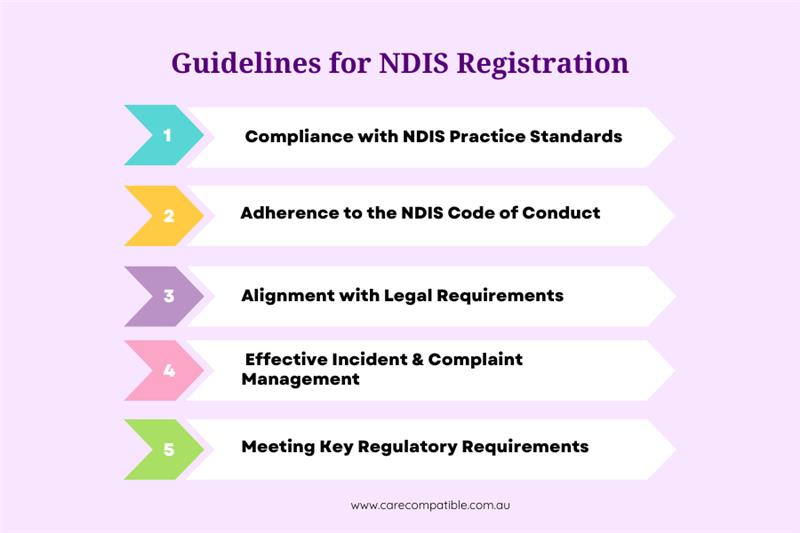
Guidelines for NDIS registration:-
Suppose you want to register as an NDIS Service Provider, even if you have doubts. You need to abide by some of the given conditions. These are:

1.  It is necessary to comply with the standards of NDIS Practices.

2. It is also essential to adhere to the NDIS Code of Conduct. 

3. It must be correlated with state, territory, and Commonwealth laws. 

4. An NDIS Service Provider has to have proper practices and systems. This is done to manage incidents            and complaints.

5. Additionally, it is vital to meet some of the requirements, such as notification, quality audit, and                  behaviour support. 

Process of Complaint Lodging

If you are thinking of complaining about any incident or the working provider. We are here to guide you through:

-> Communicate and share with your provider (if applicable) 

-> You can also directly complain to us through an online form. Otherwise, you can contact us via phone on 1800 035 544 

-> We keep you informed of all the steps. If you feel dissatisfied with our decisions, you can give us a call for      reconsideration.

-> If you do not agree with the process for handling your concerns, you can raise them with the Office of  the Commonwealth Ombudsman. 

Ways to Contact Us

You can contact us through several ways:-

-> Call : 1800035544

-> Email us atcontactcentre@ndiscommission.gov.au

-> Use TTY on 133 677

-> Use National Relay Service

-> You can also connect with us through an interpreter.

-> You can write a letter and send it by post to the given address :

a. NDIS Quality and Safeguards Commission  

b. PO Box 210 Penrith NSW 2751 

Your Partner in Quality Care: NDIS Quality and Safeguards Commission

The NDIS Quality and Safeguards Commission is the backbone of disability support services. Under its ambit, you are just a click away from accessing anything, be it NDIS complaints and safeguards jobs or holistic training through its e-learning platform.

We at Care Compatible Australia are highly devoted and sincere towards the standard practices of the NDIS regulations and compliance. Our team of experts and professionals is tailored to personalised care and services. So, if you are ready to experience quality disability support, please get in touch with us.

We would be delighted to share more details on the NDIS Quality and Safeguards Commission and related topics related to NDIS disability services. You can comment below if you need further assistance or require any NDIS regulations and compliance resources. We promise to build an inclusive future for all NDIS Participants that is better for their growth. Stay tuned for more such updates!

What is the NDIS Scheme?

Understanding the NDIS Scheme – Support for People with Disabilities
If your family or friends have any disability, they can get help from the NDIS Scheme. You will see that NDIS gives overall support to people with disabilities. This blog will deeply dive into the NDIS Scheme’s deeper aspects.
Table of Contents
The topics that we will discuss are:

We at Care Compatible Australia help you throw light on “What is NDIS Scheme?”. We will make sure that you have a cakewalk while going through our piece.

What is the NDIS Scheme?

Background and History

Before understanding the NDIS Scheme, let’s look into its background and history.
The journey toward the NDIS began long before its official launch. For many years, Australia’s disability support system was unorganised and underfunded. In fact, it often failed to meet the needs of those it was supposed to serve. Families and individuals navigated a complex web of services with little coordination. You should also consider that many fell through the cracks entirely.
The landmark report “Disability Care and Support” by the Productivity Commission brought significant results in 2011. This comprehensive review showcases the inadequacies of the existing system and recommends a new approach. This revolves around individual choice, control, and lifetime support. The report’s findings resonated across political lines. This renders rare bipartisan support for a major reform.
In 2013, the NDIS Act was passed, and trial sites were established in different locations across Australia. The scheme began to expand gradually, region by region until it reached full national coverage by 2020. This careful implementation led to learning and adaptation along the way, though not without challenges and growing pains that continue to be addressed.

Are you Eligible for NDIS?

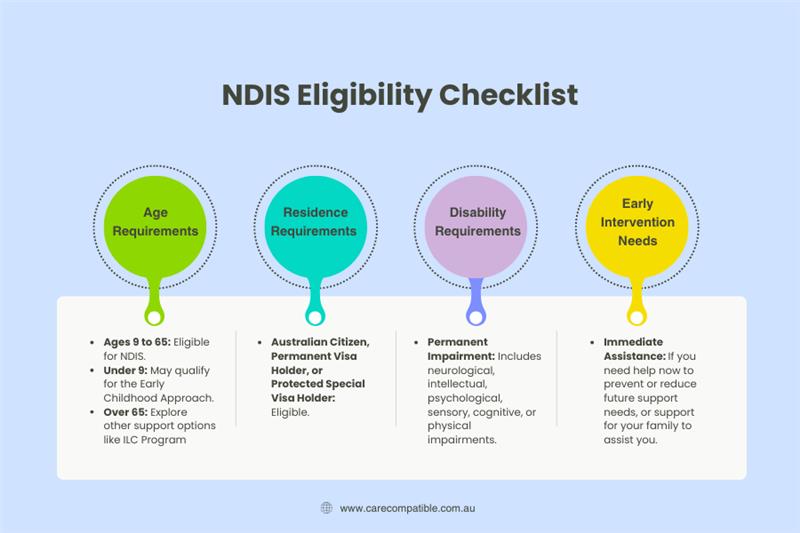
NDIS Eligibility Criteria – Find out if you qualify for the National Disability Insurance Scheme in Australia.
Now that you have understood what is NDIS Scheme?
Wondering if you or someone you know is eligible for the NDIS? The eligibility criteria are structured to ensure that the scheme supports those with the most significant needs. To be eligible, you generally need to meet the following criteria:

Australian citizenship or permanent residency:
The NDIS is shaped for Australians.
 

Residency in Australia:
You should be a resident of Australia.
 

A permanent and significant disability:
This is a key requirement. The disability must be permanent, meaning it’s likely to be lifelong, and significant. This impacts your ability to participate in everyday activities. This assessment is based on the effects of your disability. This is not merely the diagnosis. 
 

Age restrictions:
Generally, your age has to be under 65 when you apply. Children under 7 years are supported through the Early Childhood Early Intervention (ECEI) approach, which we’ll touch on later.  

Understanding what constitutes a “permanent and significant disability” can be tricky. Well, we will try to simplify it just the way we have explained what is NDIS. It’s not about the name of a condition, but how that condition affects your daily life. The NDIS focuses on the functional impact of your disability, such as your ability to communicate, move, learn, or manage daily tasks. The assessment process includes: giving medical information, reports from therapists, and sharing your personal experiences.
If you are still uncertain about your eligibility. You need not worry. The NDIS website has self-assessment tools and detailed information to help you understand the criteria.

Functions of the NDIS

Navigating the NDIS can feel like venturing into uncharted territory, but it doesn’t have to be overwhelming. Here’s a simplified breakdown of the process to get a better understanding of what is NDIS Scheme:

1. Initial Contact: Your journey starts with contacting the NDIS. You can do this online, over the phone, or in person. This is your chance to express your interest and begin the process.

2. Planning Meeting: After your initial contact, they will invite you to a planning meeting. This is a crucial step where you’ll discuss your goals, needs, and the support you think would help you achieve your aspirations. You can think about what you want to achieve in terms of greater independence, improved social connections, and access to education or employment.  

3. Plan Development: The NDIS will develop a personalised plan outlining the support and funding you’ll receive. This will be based on your planning meeting. This plan is tailored to your individual needs and goals.

4. Plan Management: You have choices on the ways of your plan to be managed. You can have a plethora of options such as:-  

  • Self-management: This gives you the most control. This allows you to choose and pay your service providers directly. It requires good organisational skills and financial management. 

    Plan-manage: A plan manager helps you manage your funding, pay your providers, and keep track of your budget. This option offers more support with the administrative side of things. 
  •  
  • NDIA-managed: The NDIA manages your funding and pays your providers directly. This is often the simplest option, but it offers less flexibility in choosing providers. 

5. Reasonable and Necessary Supports: The NDIS funds supports that are considered “reasonable and necessary” to help you achieve your goals. This might include personal care, therapy, assistive technology, community participation programs, or home modifications. The key is that the support must be related to your disability and help you live a more fulfilling life.

6. Service Providers: Once you have your plan, you can choose your service providers. You have the freedom to select providers who best meet your needs and preferences. Doing extensive research on different providers, reading reviews, and talking to other NDIS participants can be helpful.

7. Plan Implementation and Review: Your plan is not set in stone. It’s a living document that should be reviewed regularly to ensure it’s still meeting your needs. Regular reviews allow you to make adjustments. This also ensures you get the most out of your NDIS funding. The myPlace portal is an online platform that paves the way for you to access your plan, track your expenses, and coordinate with the NDIS. 

Types of Support Available

When you know the different notions of what is NDIS. Let’s analyse deeper into the NDIS Scheme.
NDIS categorises funding into three main domains: 
  1. Core Supports – This can help you with daily activities such as personal care, transport, and social participation. 
  1. Capacity Building Supports – It develops skills to improve independence, such as vocational training, and therapy.  
  1. Capital Supports – It provides funding for assistive technology, home modifications, and specialised equipment. 

The Role of NDIS Providers

We as an NDIS Provider commit to making greater changes. You will get complete support from us. We will help you to understand right away from “What is NDIS Scheme?” to its deeper aspects. We at Care Compatible Australia assure to transform and bring positive outcomes in your life.
If you are confused about how to choose your NDIS Provider. You first need to analyse their services that align with your needs, and preferences. You can also look into their reviews to evaluate their

Core Principles and Goals of NDIS

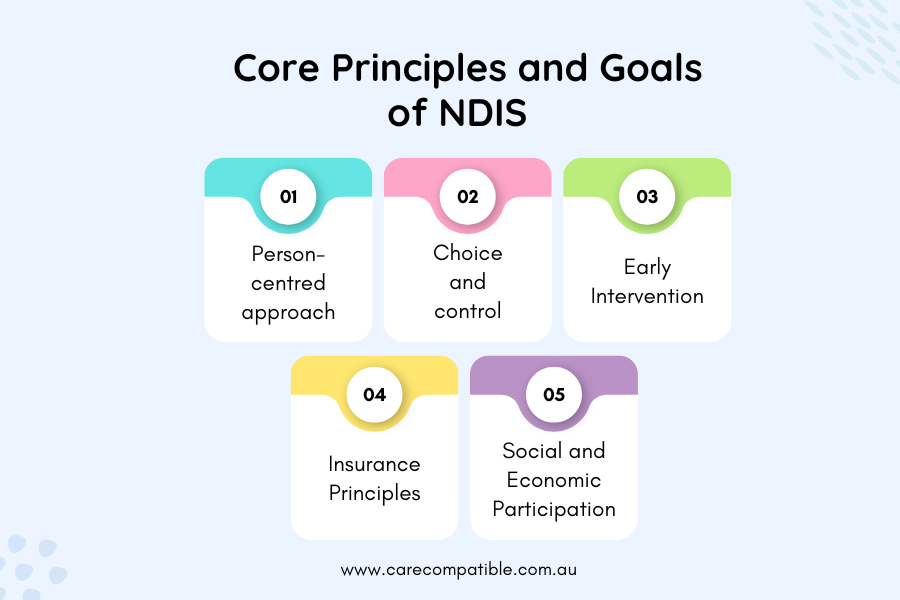
Core Principles and Goals of NDIS – Understanding person-centred support, choice, early intervention, and social participation.
The NDIS represents more than just a new funding model—it embodies a philosophical shift in how Australia approaches disability support. At its base, some of its core principles:
  • Person-centred approach: You can be at the centre of all planning and decision-making.  
  • Choice and control: Participants decide what support they need and how they’re delivered 
  • Early intervention: You can invest in support early. This can reduce the impact of disability over a lifetime.  
  • Insurance principles: The scheme takes a lifetime view of participant needs and costs 
  • Social and economic participation: This can assist you in pursuing your goals and participate fully in society.  

Challenges under the NDIS

When you’re trying to grasp the concept of what the NDIS Scheme is. It is equally important to know that this scheme is inevitable without the challenges.

Access Issues  :

It’s difficult for you to navigate a perfect NDIS Service Provider. You might also find it challenging to collect the evidence if you are someone with rare conditions.  

Plan Inconsistencies  :

There have been concerns about inconsistency. You need to analyse that it’s not degrading any particular race or gender or discrimination of any form. To make sure, you can get the best of opportunities, you need to connect better with NDIS Providers, and others concerned with the scheme.  

So, let us make it easier for you!

Tips to Navigate the NDIS

So, let us see how you can navigate the services the NDIS Scheme provides.  

NDIS website: www.ndis.gov.au – Holistic details about all aspects of the scheme 

NDIS Helpline: 1800 800 110 – Direct assistance for any queries and concerns 

Local Area Coordinators (LACs): In-person support.  

Concluding Thoughts

At Compatible Care, we acknowledge that it can be a complex process to navigate the NDIS. This brings us here to support you every step of the way. As a registered NDIS provider, we are committed to providing high-quality, person-centred services.
We make sure to design according to your unique needs and goals. From assistance with daily activities to capacity building and community participation, we offer a comprehensive range of support to empower you to live your best life.
Our experienced and compassionate team is dedicated to providing personalised care and guidance. This helps you to increase your NDIS plan and achieve your aspirations.

Feel free to contact Care Compatible Australia today to learn more about how we can help you navigate the NDIS. You can also access the support you need to thrive. Let us be your trusted partner on your NDIS journey.

For more such informative blogs, subscribe to our page. We’ll be delighted to keep serving you better.
Seraphinite AcceleratorOptimized by Seraphinite Accelerator
Turns on site high speed to be attractive for people and search engines.